Keeping Wet Leaves and Mud Out of Your Outdoor Gear Storage
6 min read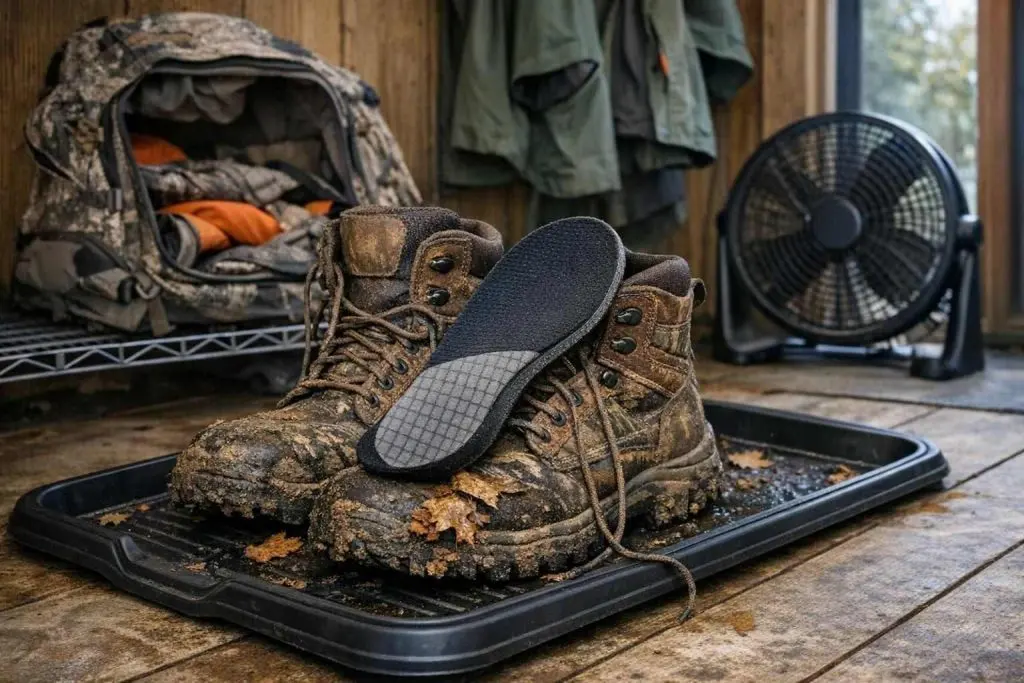
In addition to being unsightly, wet leaves and mud can bring large amounts of moisture into your boots, clothing, packs and gear. Here we explain how to notice the early signs of damage, how to provide dirty items with a clean and controlled place to dry and how to include drying of gear as part of your return from the field routine. Note that our aim here is to stop what initially appears to be a simple cleaning job from developing into serious damage to your hunting gear.
Find the First Signs of a Storage Problem
Detecting early warning signs of decay in storage is quite straightforward. Check the interior of boots and packs for coolness and stickiness. Look for slight odor when wearing jackets and hanging them up in closets. Leavings from plants such as leaves, stems, roots, and other debris will collect at the bottom of shelves. Dried mud can become sticky and attach to many surfaces including seams, zippers, and soles of boots.
Turn out boot liners (if removable) and look into pockets on packs. Check out cuffs, hem lines, and glove palms. Look under removable insoles and around closures. Damp gear should be put away in well-ventilated areas and cleaned with like gear.
Don't overlook smelly items or stains and in particular black spots on fabric, as these may indicate that the item has been in contact with moisture for a long time and needs to be cleaned and possibly separated from other items of equipment before being stored with them.
Give Mud and Leaves a Place to Stop
One of the best things you can do to improve your mudroom is to set up a boot tray or a very washable mat. The area where people will drop their dirty shoes should be contained and easy to clean. Avoid putting this at the opposite end of the house from where you enter after going out into the field.
Store clothing by hanging on hooks or in a rack rather than piling up on chairs and tables. Make sure to leave space between layers of clothing that have gotten wet in order to allow for good air flow. A crowded pile of wet clothing will only make a bigger mess as it holds moisture up against collars, pockets and the lining of garments.
Shake clothing out before storing it in your gear bins and packs, and give them a good sweep of leaves if you store them outside. Make sure to empty pockets and clean out any seed heads, twigs, etc. before putting gear in storage for the season. Also, make sure to check pockets of clothing and gear before putting it in your bins for storage as well as for travel.
Be able to clean the mudroom storage area easily. If it takes too much effort to clean a storage tray or under a rack then it will not get cleaned regularly and soon become a problem. Mudroom storage is simply a matter of organizing gear with the most practical storage.
Build a Drying Routine That Does Not Damage Gear
When storing gear for the long haul, don't confuse drying gear with blowing hot air at it and putting it away. Different gear has different adhesives, coatings, foams, rubbers and synthetic materials that will degrade with high heat. Open up, spread out and allow to dry in a well-ventilated area as per the manufacturer's care for that particular item.
Don't scrub at mud but let it dry out and then brush it off. Remove boot insoles and see if you can loosen up laces to allow for maximum ventilation within the boot. Turn outer layers such as rainwear and hunting clothing inside out and hang with all pockets open. Do not stow wet items in gloves inside sleeves of garments packed into items like tote bags.
The point where an item is fully dry throughout is the point at which it can be stored with other gear. Look for dampness in cuffs, boot linings, pockets, and in the padded parts of garments such as gilletts and fleeces. If an item still feels cool to the touch, or feels heavy for its size then it is not yet fully dry and must be given more time to dry.
After cleaning make sure the item is completely dry. Store items in storage in a way that they are not pressed against each other. This way you can still easily retrieve your gear later and it will not be damaged.
Separate Clean, Dirty and Vulnerable Items
A simple bin in the corner might seem to be the best way to keep a mudroom organized but, in reality, a single container will hide the worst of the mess. By designating areas of the storage space to field dirty items that need to be cleaned, items that are already clean and are ready to be put away in clothing for the next hunting trip, and other small pieces of gear that need to be inspected before they are put away for the season, it is easier to maintain the space over time.
Don't store soft goods in a tight space and with any suspicion of moisture. Use open-breathable storage for items that will be stored for extended periods of time and try to avoid storing items in plastic containers while they are damp. Closed containers are ideal for storing clean, dry gear and keeping it free from dust, but remember that they can lock in problems that have been overlooked during your final check.
Lower-levels of mud-covered footwear should be positioned in a way to prevent drips and grit from being transferred to gear above. Smaller items of soft goods, such as calls, headlamps, straps and gloves should be stored in visible compartments around the storage area rather than being dumped into a large box in the basement and left to gather dust.
Before storing items for the long winter, go through each item and empty out all of the pockets, check all of the closures for security, and check the soles for any excessive wear. Once you have cleaned the item, allow it to completely dry before storing it away for the season.
Check the Room Before It Becomes a Problem
Be aware that the storage area for your outdoor gear can cause just as many problems as the field itself. Look for signs of dampness such as damp floors, wet walls, blocked vents, and gear dripping with water or stored against cold surfaces. Musty odors can come from the gear itself or from the room in which it is stored.
Try to keep gear off of the floor, especially in areas where water and muck can track in. This also allows for a sweeping of items in front of storage to inspect for moisture or other issues. Storage that presses gear against cold surfaces needs to be reassessed as well for potential moisture problems.
In five minutes or less one can remove leaves, separate wet items, open up pockets and check the insides of boots. Sweep the area under the storage rack to clear away any moisture.
Choose Storage That Matches the Season
Gear storage may need to change season to season. The best gear storage for wet weather would include items with open airflow, washable surfaces and facilitate gear to be dried as quickly as possible. In dry weather, items could be stored in dust protection and gear from previous seasons could be stored in organized manner in storage.
Evaluate your outdoor gear storage system before peak hunting season. Do dirty boots sit next to clean clothes? Is there not enough space to hang up wet shells? Are items that need to be inspected for damage stuck in the back of a closed bin? These are all items that need to be addressed prior to heading out the door for hunting season.
Caring for your outdoor gear is important to protect it from damage. In addition, storing your gear correctly will help prevent items such as a dirty boot in a pocket of a coat or a wet shell hanging in the mudroom from ruining your next hunting trip.